HOME – How We Will Tell the Story of Ibsen in 2028
A home for us, a home for you
By Linnea Dale, Creative Director at the Henrik Ibsen Museum
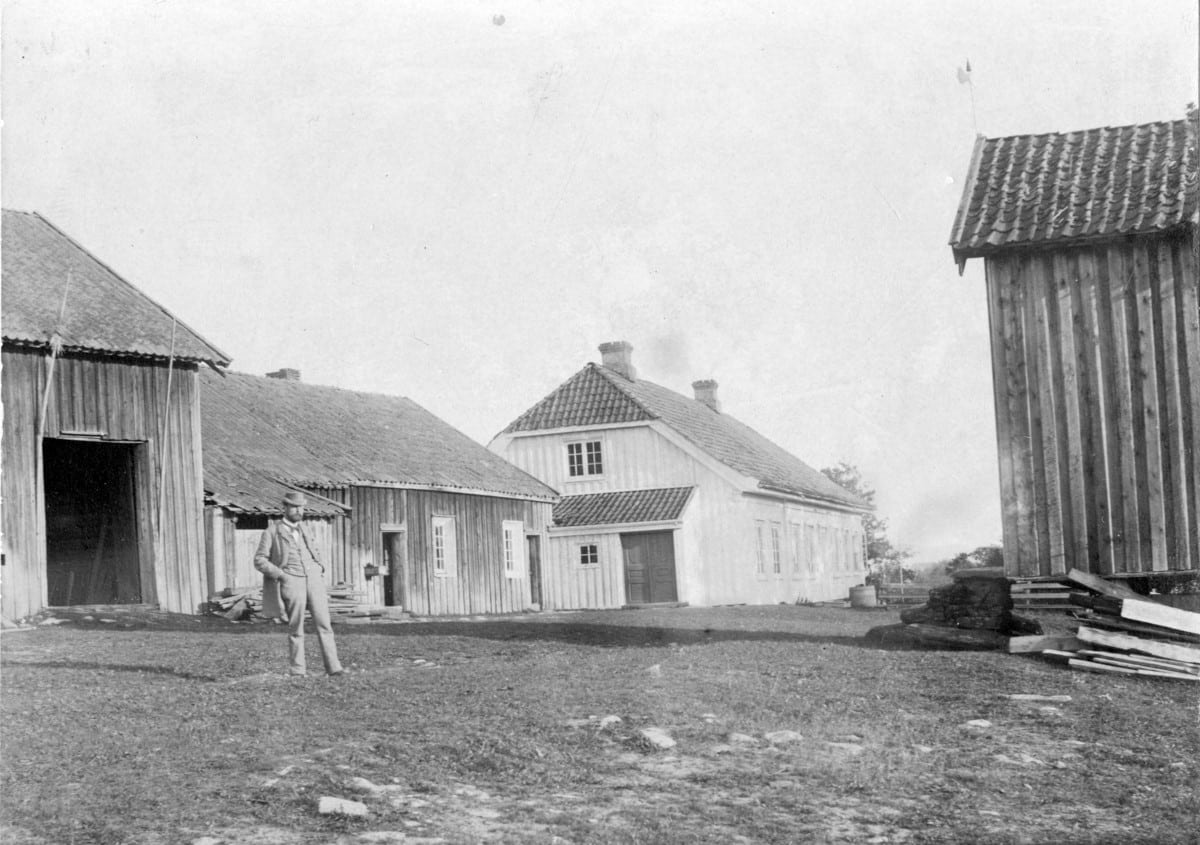
The Henrik Ibsen Museum at Venstøp is the playwright’s only remaining childhood home. It was owned by the family from 1833 to 1843, and served as their permanent residence from 1835. As far as we know, he never visited either Skien or his family again after 1850. This makes the concept of home particularly compelling in the story of Henrik Ibsen.
Ibsen’s relationship with his hometown and his family has been discussed and examined by countless Ibsen scholars. What does it take for a young man to decide never to visit his hometown or family again? And was it really so extraordinary that Henrik never returned to Skien and his family?
The museum at Venstøp tells the story of Ibsen’s life during perhaps the most formative years before adulthood. We know that he had a strong interest in theatre, literature, and art during his childhood at Venstøp. In this sense, we may say: “This is where Ibsen became Ibsen.”
Throughout the visit, we follow a theme that is simple to grasp, yet full of meaning: Home.
Of Noble Stock You Came
To understand where and what Ibsen came from, one must know the patrician class of Skien. This upper class emerged in the 17th century and largely consisted of travelling merchants who earned substantial wealth from the natural resources of Skien and its surroundings. The patrician families formed strong bonds among themselves and held significant economic and social power. Jon Nygård has written about this, pointing out that Henrik Ibsen was born into the highest layer of society, in a city that for several centuries before his birth had played a central role in Norway’s modernization. His family tree includes prominent figures in Norwegian history.
Around the time of Ibsen’s birth, the patrician class began to lose its position. Nevertheless, it retained influence through much of his upbringing. The decline long associated with Henrik Ibsen and his family was in fact shared by the city’s upper class as a whole. For the Ibsen family, the move to a town apartment in Snipetorp in 1843 marked a clear turning point. This occurred shortly after Henrik moved to Grimstad. His parents, Knud and Marichen, eventually lived at different addresses, and Ibsen’s sister Hedvig, his younger brother Ole, and several others in his circle later became members of the conservative Lammers movement.
We do not know why Ibsen never returned, but we know the framework he left behind.
Home in Literature
In his plays, the home is often an arena that reveals people in various crises. It is a space for identity, secrets, power, and conflict. In many of the plays written after 1870, the home is central to the action.
The home can be:
-
a place of identity
-
a room of secrets
-
a façade
-
an inner landscape
In Ibsen’s works, the home is never neutral. Through many of his characters, we encounter existential questions related to home. Both Hedda Gabler and Nora in A Doll’s House experience the home as a confined prison. In The Wild Duck, the home shifts from being a place of safety to a place of lies.
Against this backdrop, the concept of home — as both a physical and an inner space — becomes the foundation for the content presented in the farmhouse and the barn.
The Farmhouse
In the farmhouse, we want visitors to feel that they are entering a home, not a museum. It will be a place where one can actually do what was done at home in the 19th century: cook, bake, practice handicrafts, or learn an old trade. Visitors will also have a sensory experience of a 19th-century home, with light and darkness following the rhythm of the day. We are recreating historical light sources and striving for as accurate a representation as possible.
The house will display many original objects, which naturally limit use in certain rooms. The representational part of the home — with chamber, parlour, and garden room — contains the greatest number of original objects. The areas designated as living room and kitchen will be furnished with reproductions or newly built furniture in period style. In this way, practical visitor activities will take place in the rooms the family used daily.
The Story
The interpretation in the farmhouse focuses on Henrik as a child. We will tell the story of the environment in which he grew up, the social codes that applied, and how a patrician home functioned. Although the sources are limited, we can present a credible picture based on his sister’s accounts, other written sources, contemporary living conditions, and what we know about the family. Much of this has been communicated before, but with expanded space and newer research from Jørgen Haave, we can now present a more accurate narrative.
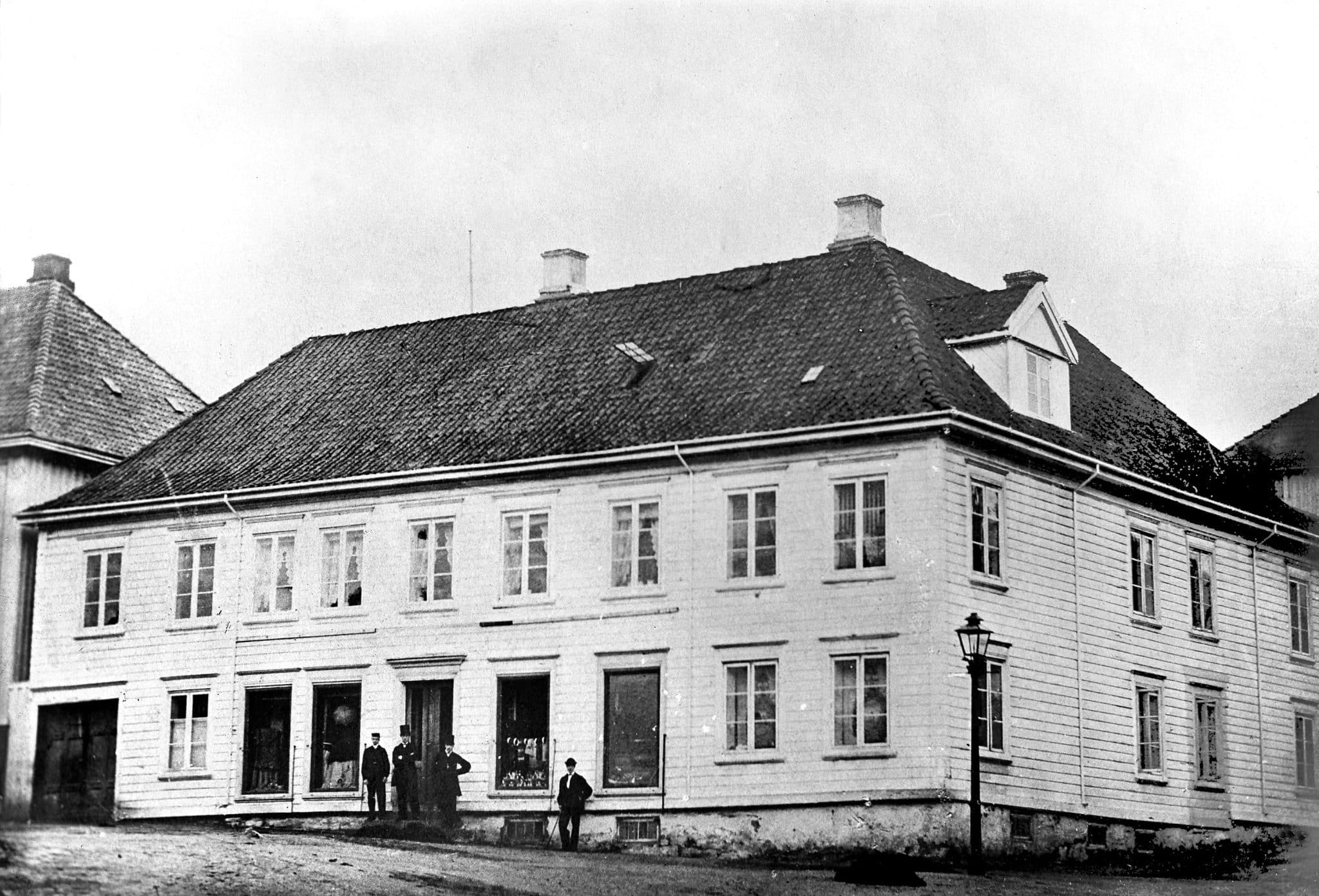
Who lived in the house, the roles they held, and the fact that the Ibsen family moved there from a large townhouse in the city centre will also be important elements. This will be conveyed both by guides and through tangible objects.
Thus, the house becomes an active learning space. It tells the story of a family striving to maintain its position — and of a son moving toward something entirely different.
The Barn
Telemark Museum is an institution that takes knowledge dissemination seriously. We will focus on conveying what we know, not what we interpret or assume. The interpretation in the barn will align with Telemark Museum’s educational plan, which emphasizes tactile, visual, and intimate experiences.
When visitors move from the farmhouse to the barn, they will experience a clear transition. On the other side, they enter a bright and airy atmosphere that physically conveys change. Here, the theme of Home expands — from the concrete to the abstract.
The Story
After encountering childhood in the farmhouse, the exhibition in the barn follows Ibsen’s journey to the great stages, alongside biographical excerpts. Here we examine the home as façade — and what happens behind it.
The exhibition suggests possible connections between life and literature without asserting them as facts. The unresolved questions in Ibsen’s life serve as points of reflection. At the same time, it is important to emphasize that Ibsen’s drama offers countless interpretative entry points. His plays can be understood in infinitely many ways — one of their greatest strengths. In this way, we present Ibsen both as a human being and as an author.
Thematic Approaches
The exhibition space will include large projected surfaces exploring the theme, as well as installations examining the home behind the façade. Selected episodes from his life will be presented through a timeline running the entire length of the barn.
Ibsen evolved from a playwright with audiences in Norway and Scandinavia into an international force. How this journey unfolded — and what position he holds today — are central questions we pose. He lived in several European cities and spent years in self-imposed exile from Norway.
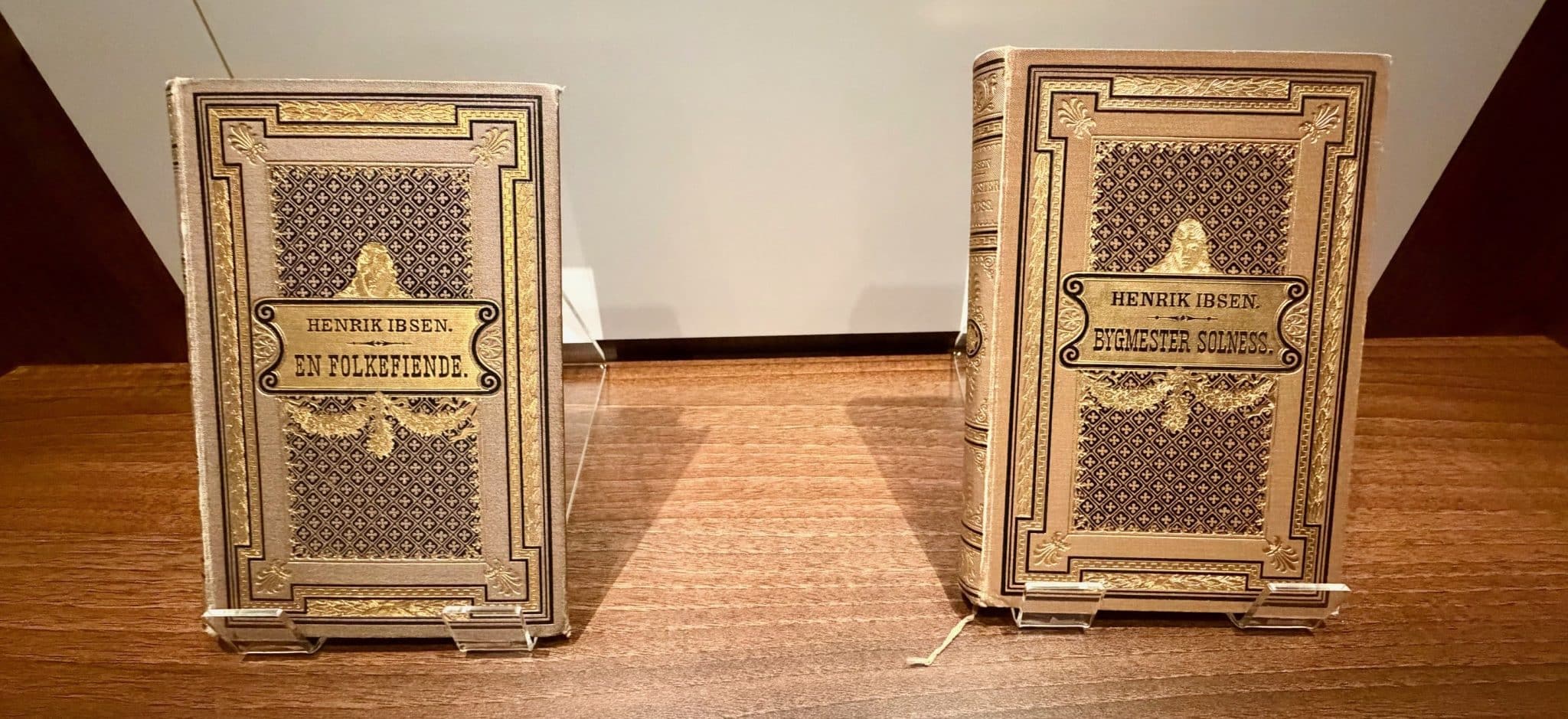
The museum holds many objects related to Ibsen’s life. Those connected to his childhood at Venstøp will be displayed in the farmhouse, while other relevant objects will be shown in the barn. We aim to contextualize these objects by linking them to specific events in his life or excerpts from his plays. One particularly important object is the christening gown, on loan from the Ibsen family. Other highlighted objects include first editions, his hat, coat, glasses, and handicrafts.
Henrik Ibsen’s drama is the reason for his fame, even 200 years after his birth. It is the reason the museum exists and why the building is protected. Therefore, it is essential for us to foreground it. In selecting which plays to feature, the significance of the home is especially important. In many of his works, the home functions as a red thread, representing different things depending on our own life experiences or interpretations.
Why Ibsen?
Many wonder why we still speak about Ibsen, and we hope that a visit to the Henrik Ibsen Museum can help answer that question.
Because his drama gives us characters in whom we can see ourselves.
Because it allows us to examine our own lives.
Because home is not only a place where we live, but something we carry with us.
What Do We Aim to Achieve at the Henrik Ibsen Museum in 2028?
The Henrik Ibsen Museum will continue to be a strong knowledge institution for children, young people, and adults. We are developing exhibitions and educational programs suitable both for schools and general visitors. Ibsen remains relevant 200 years after his lifetime because of the universal questions he explores in his writing.
The exhibition in the barn will inspire, spark curiosity, and encourage reflection, with particular emphasis on his literature. The childhood home will serve as an arena for exploring how Henrik grew up and the social conditions into which he was born.
The concept of home will be visible in everything the Henrik Ibsen Museum presents in 2028 — in the anniversary program, new educational offerings, and other events. The museum will significantly expand its programs for children and young people, extend its opening hours, and demonstrate Ibsen’s relevance to an even broader audience — locally, nationally, and internationally.
He never returned. But we continually return to him.
Thanks to Ida Høy, Anette Storli Andersen and staff at Telemark museum for participation in the project.